What is PCOD?
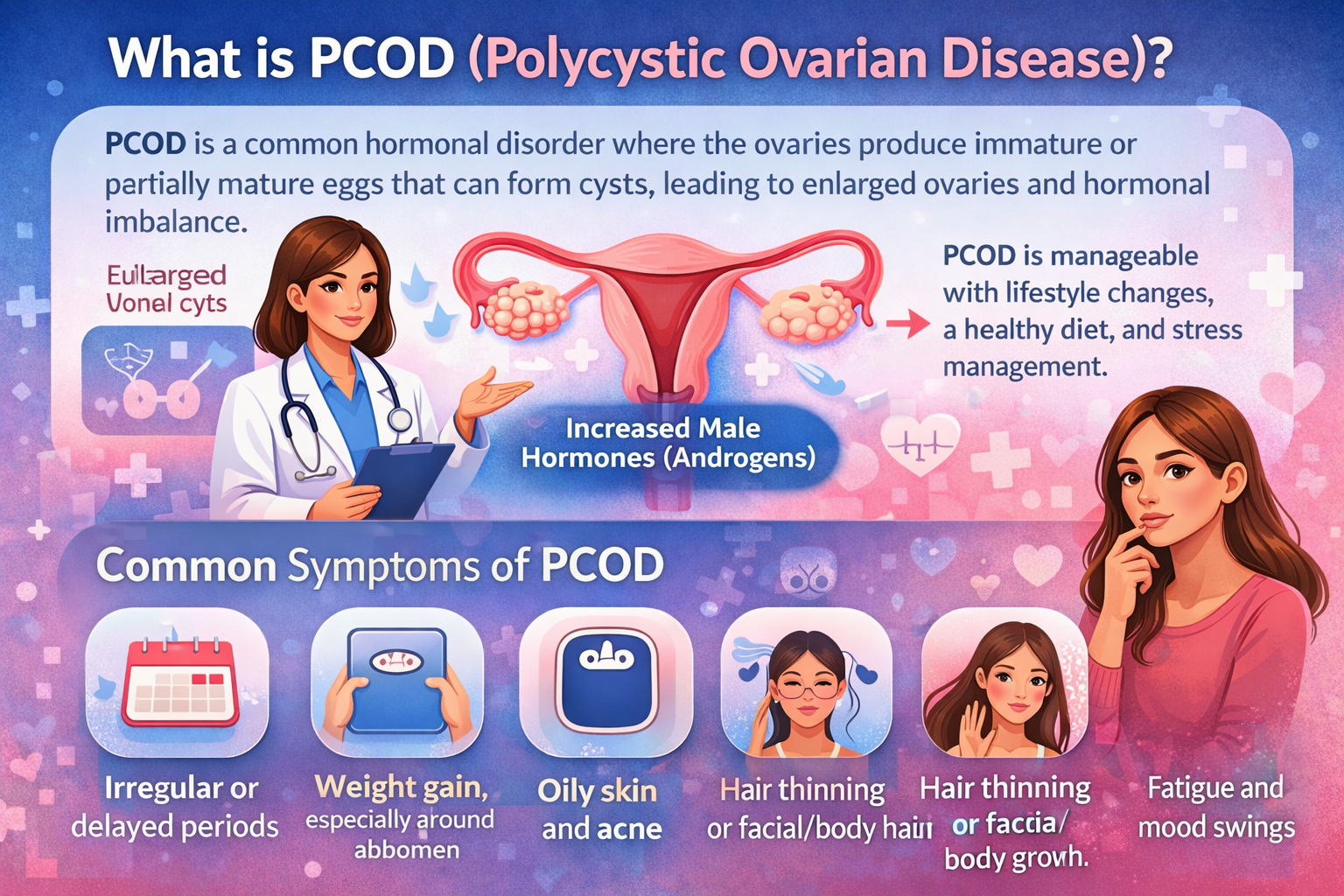
PCOD (Polycystic Ovarian Disease) is a condition where a woman’s ovaries release many
immature or partially mature eggs, which over time turn into cysts. This leads to enlarged
ovaries and hormonal imbalance, especially involving excess production of androgens (male
hormones).
PCOD is relatively common and can often be managed with lifestyle changes, a healthy diet,
and stress management.
Common symptoms of PCOD include:
● Irregular or delayed periods
● Weight gain, especially around the abdomen
● Oily skin and acne
● Hair thinning or excessive hair growth (hirsutism)
● Fatigue and mood swings
What is PCOS?

PCOS (Polycystic Ovary Syndrome) is a more severe metabolic and hormonal disorder. In
PCOS, the hormonal imbalance not only affects the ovaries but also disrupts insulin metabolism
and increases the risk of other long-term conditions such as diabetes, hypertension, and heart
disease.
Women with PCOS often experience chronic anovulation (no ovulation), making it one of the
leading causes of infertility.
Common symptoms of PCOS include:
● Absence of periods or very few menstrual cycles in a year
● Difficulty in conceiving
● Unwanted facial or body hair
● Acne, oily skin, and dandruff
● Weight gain and difficulty losing weight
● Hair fall or male-pattern baldness
● Dark patches on the neck or underarms (acanthosis nigricans)
Difference Between PCOD and PCOS
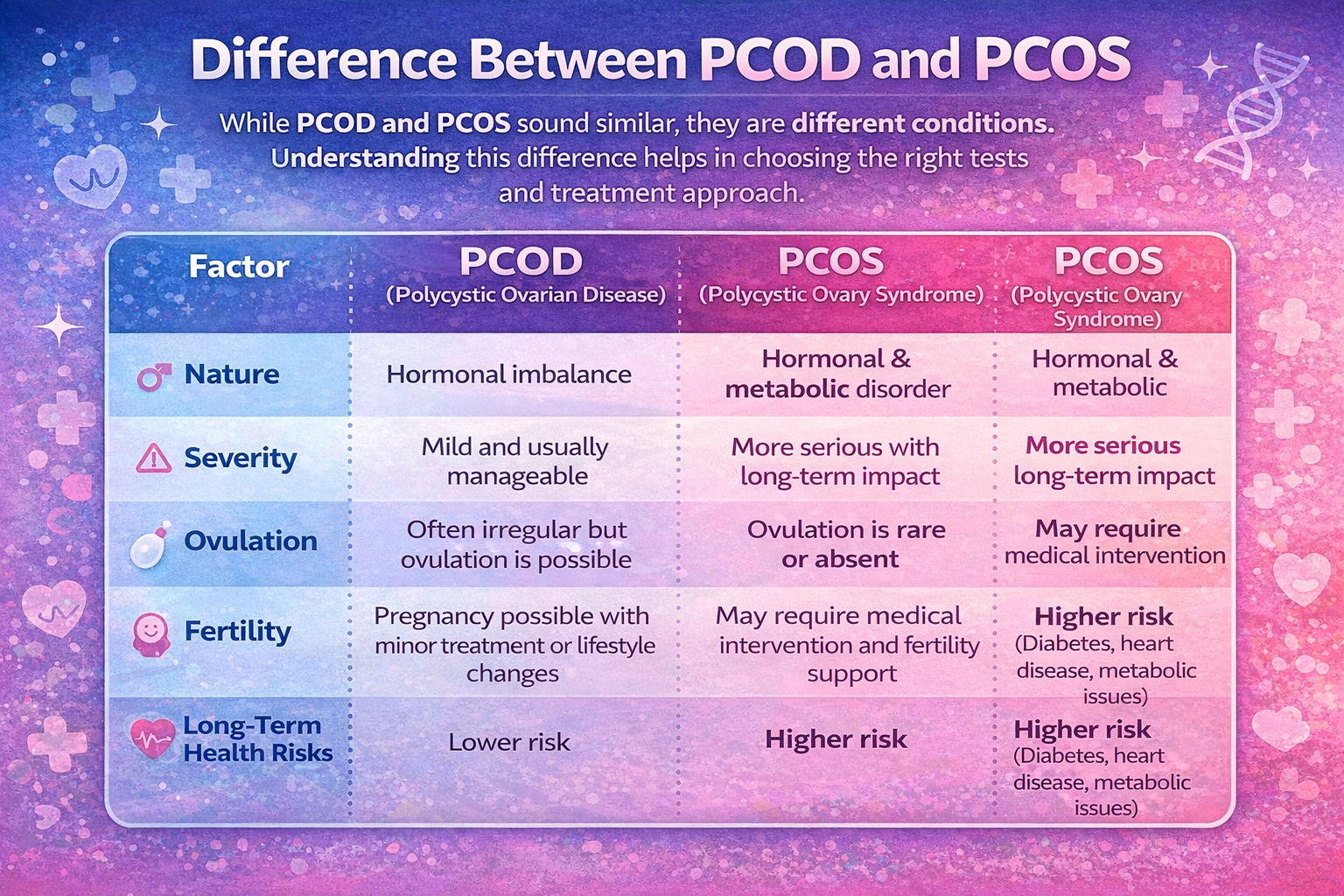
While PCOD and PCOS sound similar, they are different conditions. Understanding this difference helps in choosing the right tests and treatment approach.
| Factor | PCOD (Polycystic Ovarian Disease) | PCOS (Polycystic Ovary Syndrome) |
|---|---|---|
| Nature | Hormonal imbalance | Hormonal and metabolic disorder |
| Severity | Mild and usually manageable | More serious with long-term impact |
| Ovulation | Often irregular but ovulation is possible | Ovulation is rare or absent |
| Fertility | Pregnancy possible with minor treatment or lifestyle changes | May require medical intervention and fertility support |
| Long-Term Health Risks | Lower risk | Higher risk (Diabetes, heart disease, metabolic issues) |
The Role of Hormones in PCOD/PCOS
Hormones are like chemical messengers in your body. When they go out of balance, every
system—especially the reproductive system—feels the effect.
The major hormones involved in PCOD and PCOS include:
● FSH (Follicle Stimulating Hormone): Helps eggs mature in the ovaries.
● LH (Luteinizing Hormone): Triggers ovulation and the release of eggs.
● Estrogen: The main female sex hormone that regulates the menstrual cycle.
● Progesterone: Prepares the uterus for pregnancy.
● Testosterone (androgens): Male hormones that are usually present in small amounts
but increase in PCOS.
● Insulin: Regulates blood sugar; insulin resistance can worsen PCOS symptoms.
Even a small imbalance in these hormones can disturb your menstrual cycle, fertility, and
metabolism.
Essential Hormone Tests for PCOD/PCOS
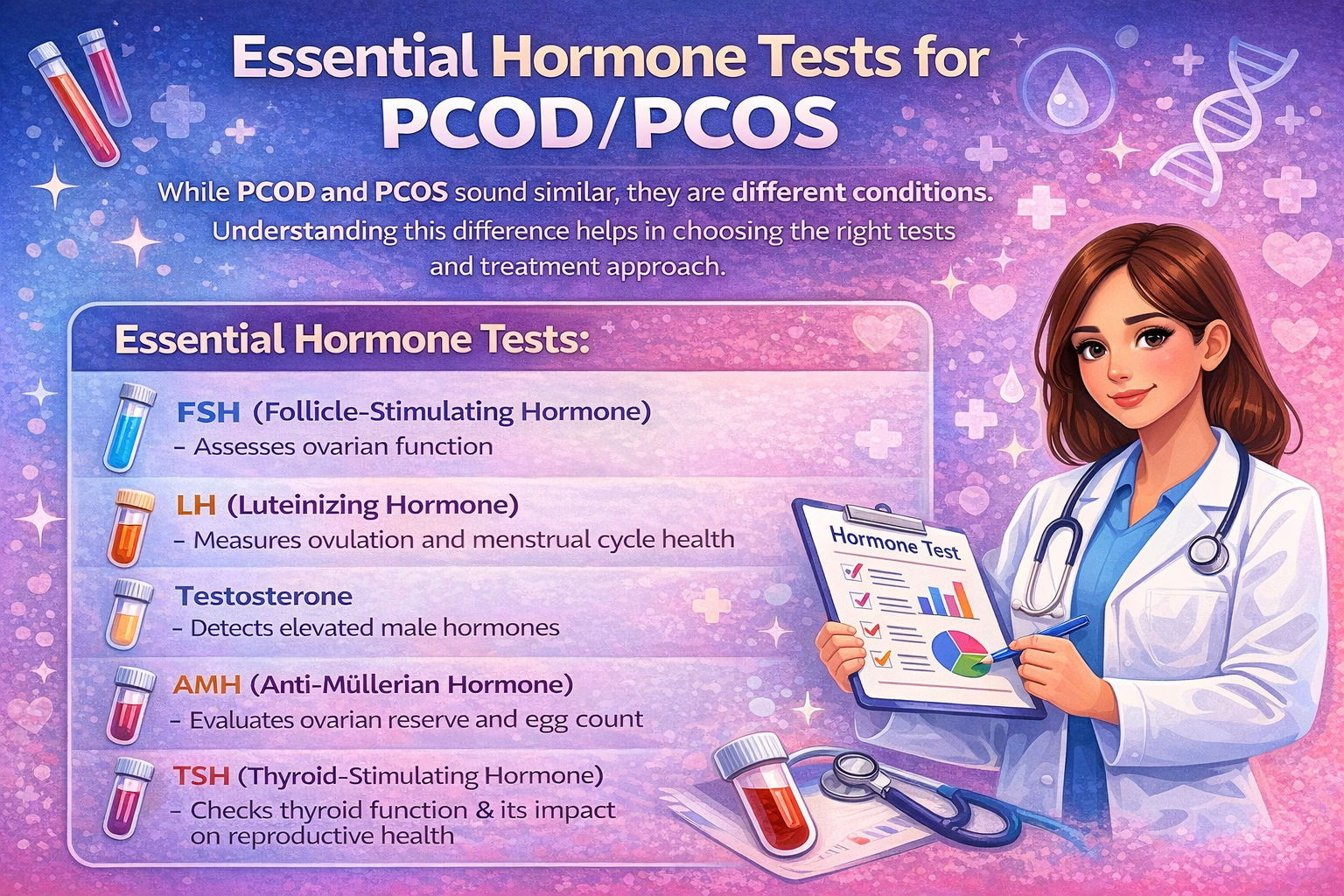
At Pathquest Diagnostics, we recommend a set of key hormone and blood tests to accurately
diagnose PCOD/PCOS and understand your body’s hormonal balance.
Here are the main tests:
1. FSH (Follicle Stimulating Hormone):
Measures how well your ovaries are functioning. Low or high levels can indicate hormonal
imbalance affecting ovulation.
2. LH (Luteinizing Hormone):
High LH levels compared to FSH suggest PCOS. The LH/FSH ratio is a key indicator of
ovulation issues.
3. Prolactin:
Elevated prolactin levels can cause irregular periods and may mimic PCOS symptoms.
4. Estradiol (Estrogen):
Helps assess ovarian function and overall reproductive health.
5. Testosterone (Total and Free):
High levels indicate androgen excess, responsible for acne, hair growth, and scalp hair loss in
PCOS.
6. DHEAS (Dehydroepiandrosterone Sulfate):
Another androgen that helps rule out adrenal gland involvement.
7. Insulin and Glucose Tolerance Tests:
These detect insulin resistance, a common issue in PCOS that increases the risk of diabetes.
8. Thyroid Function Tests (T3, T4, TSH):
Thyroid imbalances can worsen PCOS symptoms or mimic them.
9. AMH (Anti-Müllerian Hormone):
A marker for ovarian reserve; high AMH levels are often associated with PCOS.
All these tests together provide a comprehensive view of hormonal health.
At Pathquest Diagnostics, we use advanced equipment and precise methods to ensure
reliable and quick results, helping your doctor plan the right treatment path for you.
Why Testing is Important
Many women ignore irregular periods or mild acne, assuming they’re normal. But PCOD and
PCOS are progressive conditions—if left unchecked, they can lead to complications like:
● Infertility
● Type 2 diabetes
● High blood pressure
● Endometrial cancer
● Obesity-related problems
● Depression and anxiety
Getting tested early at Pathquest Diagnostics not only helps detect the condition but also
empowers you to manage it better through timely medical and lifestyle changes.
Managing PCOD/PCOS: Lifestyle Matters

While medical treatment depends on the severity of the condition, lifestyle management plays
a big role in controlling symptoms.
Here are some tips from experts at Pathquest Diagnostics:
1. Eat Balanced:
Focus on whole grains, lean proteins, fruits, and vegetables. Avoid refined sugar and
processed food.
2. Exercise Regularly:
At least 30–40 minutes of moderate exercise daily helps regulate hormones and
improve insulin sensitivity.
3. Sleep Well:
Proper sleep helps in hormonal regulation and stress control.
4. Reduce Stress:
Yoga, meditation, and deep breathing can help balance cortisol, the stress hormone.
5. Regular Monitoring:
Schedule your hormone tests and follow-ups regularly at Pathquest Diagnostics to
track progress.
Treatment Options
The treatment for PCOD/PCOS usually includes:
● Lifestyle modification (diet, exercise, stress management)
● Medication to balance hormones or regulate menstrual cycles
● Fertility treatment if conception is difficult
● Insulin-sensitizing drugs in cases of insulin resistance
Your doctor will guide you based on your test reports and medical history.
At Pathquest Diagnostics, our role is to provide accurate, timely, and affordable hormone
testing so you and your doctor can make informed decisions.
When Should You Get Tested?
You should consider visiting Pathquest Diagnostics for hormone testing if you experience any
of the following:
● Irregular or missed periods
● Difficulty conceiving
● Unexplained weight gain
● Excess facial or body hair
● Hair thinning or baldness
● Acne or oily skin that doesn’t improve
● Persistent fatigue or mood changes
Early detection is the key. The sooner the imbalance is identified, the easier it is to manage the
symptoms and prevent complications.
Final Thoughts
PCOD and PCOS are not the end of your health story.
They are signals from your body asking for care, attention, and balance. With the right medical
support, healthy lifestyle choices, and regular testing, you can lead a normal and fulfilling life.
At Pathquest Diagnostics, we are committed to empowering women with knowledge,
awareness, and accurate diagnostic solutions. Our advanced hormone testing and dedicated
team ensure that every woman receives the clarity she needs to take control of her health.
Remember — your hormones may fluctuate, but your power to take charge of your health never
should.
Visit Pathquest Diagnostics Today!
Get your PCOD/PCOS and Hormone Profile Tests done with confidence and accuracy.
Early detection can make all the difference.